Hard vs Soft vs Neutral UV Ink: How to Choose for Acrylic, Metal, Leather & Phone Cases
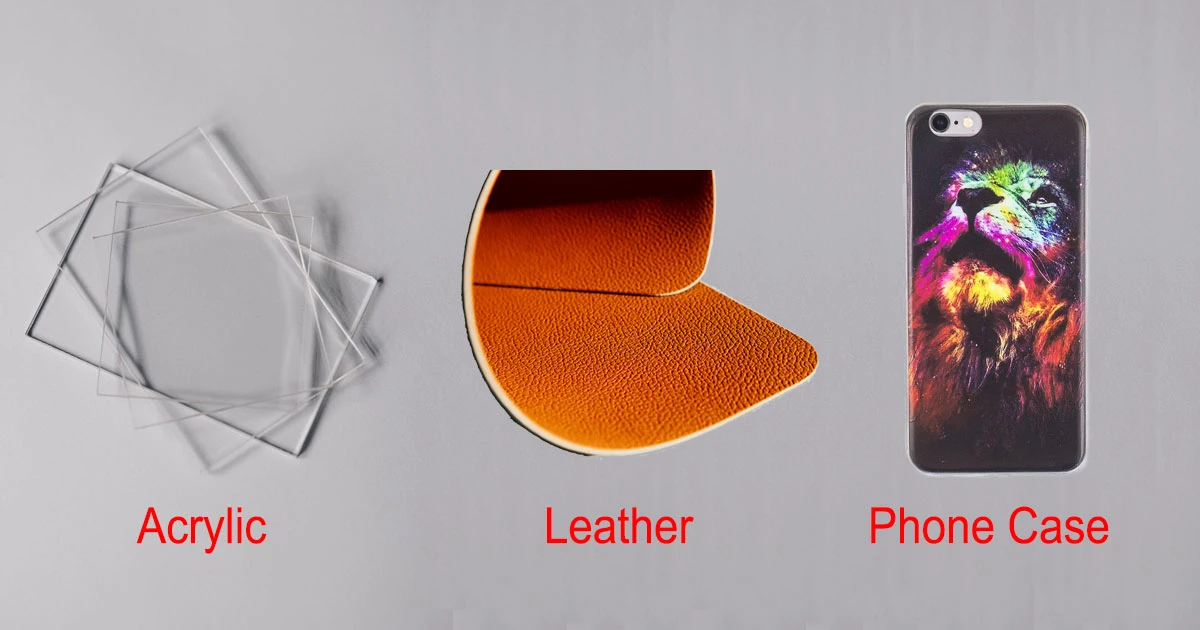
UV curable ink substrate flexibility spectrum: Rigid Acrylic (demands Hard UV ink), Flexible Leather (demands Soft UV ink), and Semi-Rigid Phone Cases (demands Neutral UV ink).
Table of Contents
When buying a UV flatbed or roll-to-roll printer, one of the most common mistakes new print shop owners make is assuming all UV curable inks behave the same way on every material.
In workshop production, loading the wrong UV ink formulation leads to two common failure scenarios:
- Printing rigid Hard UV ink on flexible items: The graphic looks sharp upon curing, but the moment a customer bends a leather wallet or snaps a TPU phone case onto a phone, the ink film fractures into white hairline cracks and peels off.
- Printing flexible Soft UV ink on rigid signage: The ink bonds to an acrylic plaque or aluminum sheet, but because soft ink has low surface hardness, a light scrape with a fingernail or car key leaves permanent scratch marks.
To prevent costly ink flushes and rejected customer batches, this guide explains the chemical differences between Hard, Soft, and Neutral UV inks, how to match them to your substrates, and how our factory engineers test adhesion.
Technical Comparison: Hard vs Soft vs Neutral UV Ink
All UV inks cure through photopolymerization when exposed to 395nm UV LED light. The physical difference between hard, soft, and neutral inks comes down to polymer cross-link density — how tightly the acrylate oligomer chains bind together during curing.
| Parameter | Hard UV Ink (硬性墨水) | Soft / Flexible UV Ink (软性墨水) | Neutral / Universal UV Ink (中性墨水) |
|---|---|---|---|
| Polymer Structure | High cross-link density (dense polymer shield) | Long-chain oligomers (low cross-link density) | Balanced hybrid formulation |
| Cured Film Hardness | 3H to 5H (pencil hardness) | Less than HB (soft hand-feel) | 1H to 2H (moderate surface resistance) |
| Elongation / Stretch | Near 0% (rigid film) | 100% to 300% without cracking | 50% to 100% moderate flexibility |
| Scratch Resistance | Excellent (resists keys, coins, daily abrasion) | Low on hard substrates (can be scratched by nails) | Medium (suitable for general merchandise) |
| Chemical Resistance | High (resists alcohol wipes and mild acids) | Moderate | Moderate |
| Primary Substrates | Acrylic, metal, solid wood, glass, ceramics | Genuine/PU leather, TPU, soft PVC, canvas | Semi-rigid PVC, KT board, hard PC, phone cases |
| Typical Failure Mode | Cracks and flakes when bent or folded | Scratches off easily on rigid acrylic or glass | Not hard enough for glass; not flexible enough for soft leather |
1. Hard UV Ink: Maximum Scratch Resistance for Rigid Substrates
Hard UV ink cures into a dense, glass-like protective layer. Because the polymer chains are tightly cross-linked, the surface reaches a high hardness rating (up to 3H–5H).
Where Hard UV ink excels:
- Acrylic (PMMA) awards, signage, and display stands: Delivers crisp edges, high gloss, and excellent resistance to surface scratches during handling.
- Coated metals and aluminum composite panels (ACP): Provides durable outdoor and indoor signage graphics that withstand environmental friction.
- Solid wood and MDF promotional items: Bonds securely to porous and semi-porous rigid timber surfaces.
- Ceramic tiles and glass panels: Excellent clarity and hardness (requires a wipe-on primer before printing).
The limitation of Hard UV ink:
Hard ink has almost zero elongation. If you apply it to a flexible substrate like a soft silicone wristband or a PU leather notebook cover, normal bending stress will cause the brittle ink film to snap and flake off.
2. Soft UV Ink: High Elasticity for Leather and Flexible Media
Soft UV ink uses long-chain oligomers that maintain flexible molecular bonds after UV LED exposure. The cured layer acts like an elastic membrane that stretches, twists, and recovers alongside the substrate.
Where Soft UV ink excels:
- Leather and PU products: Wallets, handbags, belts, and customized leather patches that undergo constant bending and folding.
- Flexible TPU phone cases: Soft cases can be twisted and snapped onto mobile devices repeatedly without the graphic peeling or cracking.
- Soft PVC, canvas, and backlit film: Roll-to-roll advertising media that needs to be rolled, tensioned, or stitched without ink fracture.
The limitation of Soft UV ink:
Soft ink sacrifices surface hardness for flexibility. If you load soft ink into a flatbed printer and print on rigid cast acrylic, the surface will feel slightly tacky and will easily pick up scratch marks from everyday contact.
3. Neutral UV Ink: The Universal Option for Custom Gift Shops
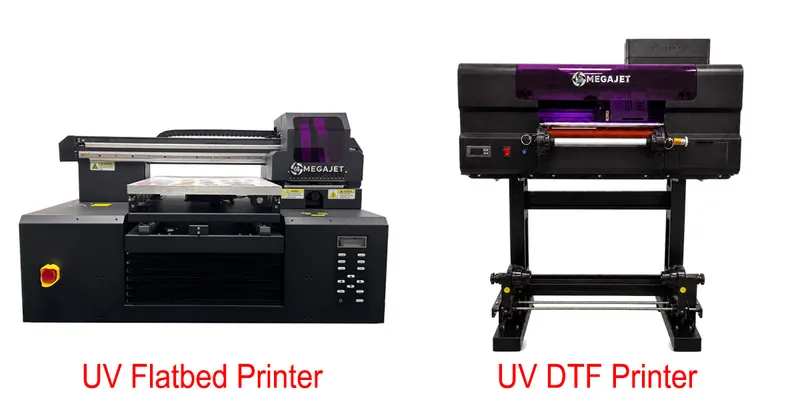
For many small-to-medium print studios operating a single commercial UV flatbed printer (such as our 40 × 60 cm UV model), dedicating one machine exclusively to hard acrylic or exclusively to soft leather is not practical. Flushing an entire ink system to switch between hard and soft ink wastes valuable ink and cleaning flush, takes machines offline, and increases operational hassle.
Neutral UV ink is engineered as a balanced compromise:
- It provides enough elongation (50% to 100%) to handle semi-rigid items like hard PC phone covers, PVC cards, and flexible packaging mockups without cracking.
- It provides enough surface hardness (1H to 2H) to resist moderate handling friction on wooden boxes, KT display boards, and promotional gifts.
While neutral ink cannot match the extreme 5H hardness of hard ink on glass or the 300% stretch of soft ink on leather, it is the most economical, versatile choice for mixed-application workshops.
The Primer Reality: When Hard Ink Alone Is Not Enough
Many suppliers advertise Hard UV ink as a "print-on-anything" solution. From an engineering standpoint, this is inaccurate.
Certain smooth, non-porous materials — specifically tempered glass, mirror-finish stainless steel, glazed ceramics, and smooth aluminum — have very low surface energy. Even premium Hard UV ink cannot create sufficient mechanical interlocking on these surfaces.
To achieve permanent bonding on smooth materials, you must apply a specialized liquid primer (coating):
- Metal Primer: Contains active bonding resins that form chemical bridge points between the metal surface and UV acrylate radicals.
- Glass/Ceramic Primer: Utilizes silane coupling agents that chemically bond to silica ($SiO_2$) molecules, preventing water and humidity from creeping under the ink film.
How to verify adhesion in your workshop:
To verify whether UV ink has properly bonded to a challenging substrate, our factory technicians and workshops perform both direct scratch testing and the standardized cross-hatch tape adhesion test (referenced under ASTM D3359 paint adhesion testing, commonly known as 百格测试):
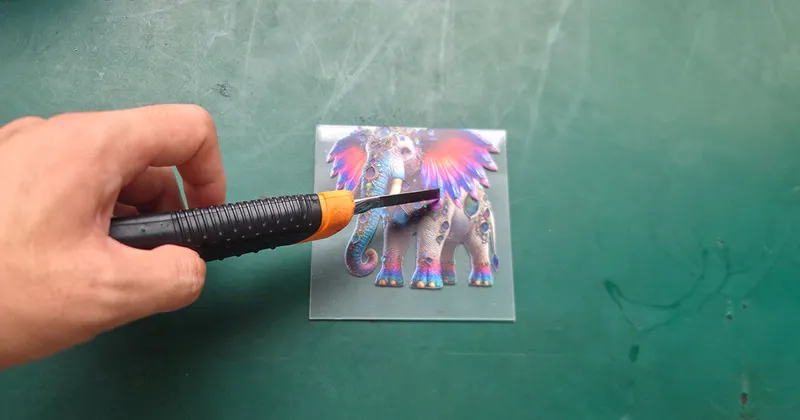
- Utility Blade Scrape Test: Firmly drag a sharp utility knife blade across the cured pattern. Properly cured hard ink on an acrylic plate should resist peeling or flaking off in chunks.
- Cross-Hatch Lattice Test: Use a cross-hatch cutter to score a 1mm × 1mm grid (100 small squares) through the ink film down to the substrate.
- Tape Pull Test: Firmly apply 3M 600 pressure-sensitive tape over the scored grid, rub with your thumb to eliminate air pockets, and pull smoothly at 90° within 90 seconds.
- Pass standard (Class 4B / 5B): Less than 5% lattice detachment. If significant squares peel away (Class 0B / 1B), the substrate requires an appropriate wipe-on primer or a more flexible ink formula.
Beware of "Coating-Free" UV Inks
You may see listings for "coating-free UV inks" (免涂层墨水) promising to print directly on untreated glass and metal without any manual wiping.
We advise caution with these formulations. To make the ink adhere to glass without a wipe-on coat, manufacturers mix corrosive silane bonding agents directly into the bulk ink. In practice, these additives accelerate nozzle drying, create microscopic sedimentation around piezo nozzle plates, and dramatically shorten the lifespan of delicate industrial printheads like the Epson i3200-u1 and i1600-u1. Manual wiping with a dedicated primer takes 30 seconds per item and protects your printhead investment.
Factory Decision Framework: Which UV Ink Should You Load?
Here is our straightforward recommendation based on how your workshop operates:
- Choose Hard UV Ink if 80%+ of your production consists of rigid signage, acrylic awards, wooden crafts, metal plaques, or glass panels. Pair it with dedicated wipe-on primers for glass and polished metals.
- Choose Soft UV Ink if your primary business is custom leather accessories, flexible TPU phone cases, canvas wall art, or roll-to-roll banner graphics that must flex without cracking.
- Choose Neutral UV Ink if you operate a single flatbed machine serving diverse retail walk-in orders (mixing hard PC cases, KT foam boards, stationery, and promotional gifts) where maximum flexibility and reasonable scratch resistance are required simultaneously.
Still uncertain which ink hardness fits your specific substrate? Send your material details or ship blank samples to our manufacturing facility. The Megajet engineering team can run sample print and adhesion testing on our production machines and recommend the exact ink formula and primer setup before you commit to bulk production.