i1600 vs i3200 Printhead: Which One to Choose for Your DTF Printer?
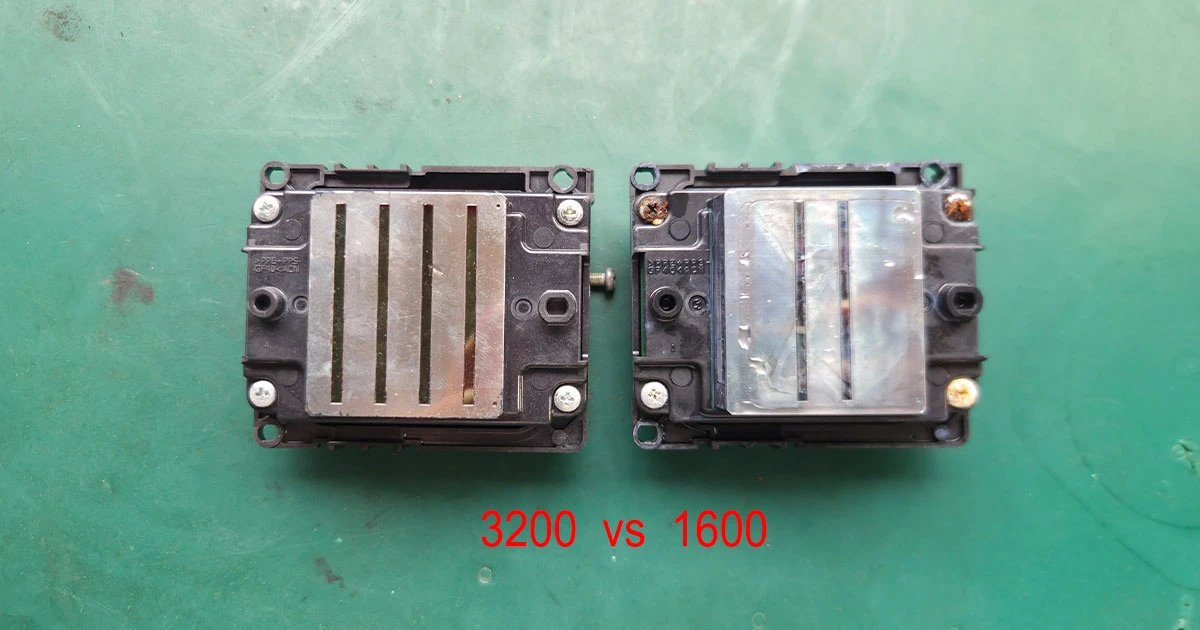
Epson i-series comparison: i1600 (4 nozzle rows, 1,600 nozzles) vs. i3200 (8 nozzle rows, 3,200 nozzles) for commercial DTF, UV, and eco-solvent machines.
Table of Contents
Many foreign customers ask us this question when buying a DTF printer: Is i1600 print quality worse than i3200 because the head is cheaper?
The simple answer is no. Both i1600 and i3200 use the same Epson PrecisionCore MicroTFP chip. Both have 300 npi per row, and 600 npi when two rows combine. Under the same RIP software, waveform curve, and pass setup, the print sharpness and detail on PET film look the same.
The real difference is printing speed and replacement cost. An i3200 machine prints faster, but it only makes sense if you have enough daily print orders to keep the machine busy.
What i1600 and i3200 have in common
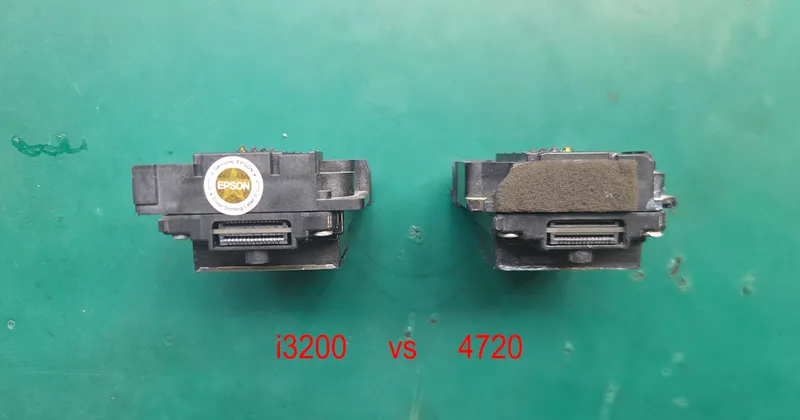
Both models are original Epson industrial printheads made with MEMS technology. The head body size is exactly the same, the effective print width is both 33.8 mm (1.33 inch), and both can run water-based, eco-solvent, and UV inks.
| Parameter | Epson i1600 | Epson i3200 |
|---|---|---|
| Printhead Type | PrecisionCore MicroTFP (MEMS) | PrecisionCore MicroTFP (MEMS) |
| Total Nozzles | 1,600 nozzles (4 rows) | 3,200 nozzles (8 rows) |
| Nozzle Resolution | 300 npi/row (600 npi / 2 rows) | 300 npi/row (600 npi / 2 rows) |
| Effective Print Width | 33.8 mm (1.33 inch) | 33.8 mm (1.33 inch) |
| Supported Inks | A1 (water-based), E1 (eco-solvent), U1 (UV) | A1 (water-based), E1 (eco-solvent), U1 (UV) |
| Color Channels | Max 4 colors | Max 4 colors |
| Dimensions & Weight | 69.1 × 59.5 × 35.6 mm (about 80g) | 69.1 × 59.5 × 35.6 mm (about 82g) |
Because the nozzle size and ink drop control are the same, i1600 is definitely not a low-precision head. Small text, barcode lines, and color gradients print very cleanly on both heads.
Real print speed test and head cost
Both heads have 33.8 mm width, but i3200 has 8 rows of nozzles (3200 holes) and i1600 has 4 rows (1600 holes). With double the nozzle density, i3200 jets more ink in one carriage pass.
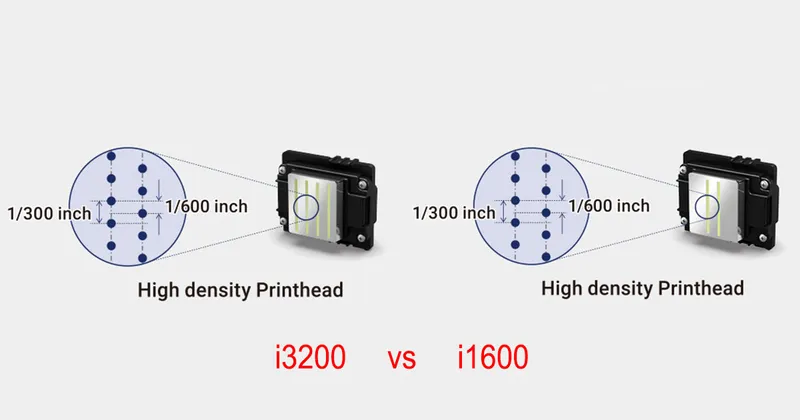
However, 2 times nozzles does not mean 2 times printer speed. In real factory production, the final output speed is also limited by carriage motor speed, pass numbers, white ink layer thickness, and the heating speed of the powder shaker and dryer.
Here are the real test speeds from Megajet factory on our complete DTF printers (standard CMYK + White textile pigment ink, standard production pass):
| Machine Model | i1600 Head Config | i3200 Head Config |
|---|---|---|
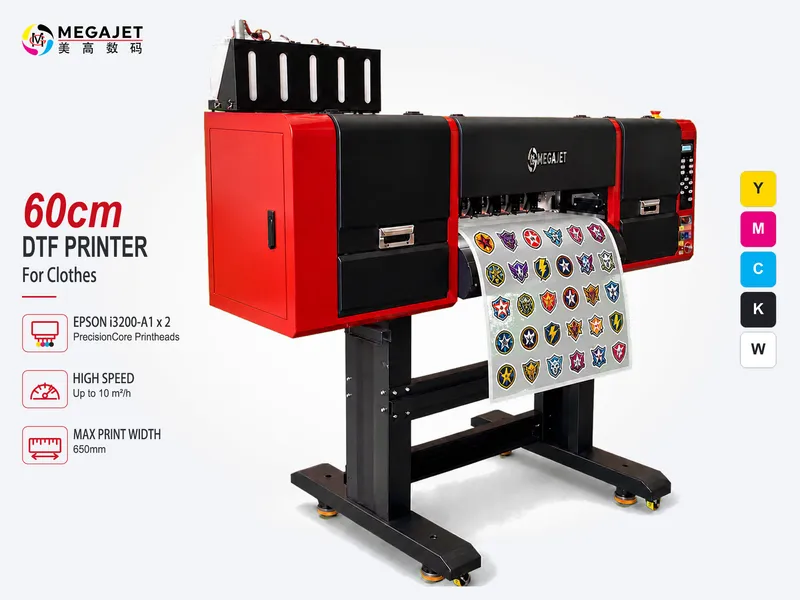
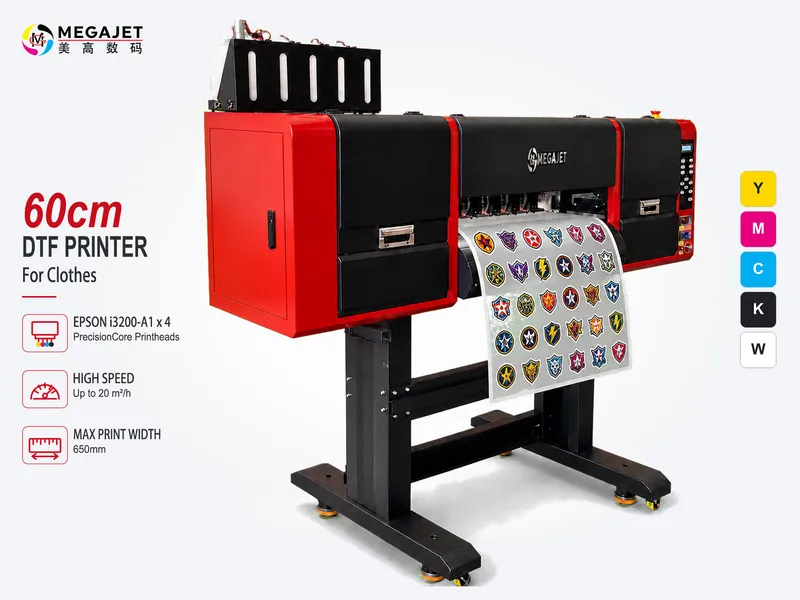
| 2-Head DTF Printer (60cm) | about 8 sqm/h | about 10 sqm/h |
| 4-Head DTF Printer (60cm) | about 16 sqm/h | about 20 sqm/h |
Under standard DTF printing mode, an i3200 printer is about 25% faster than an i1600 printer with the same head quantity. In daily work, this extra speed helps you finish urgent orders before closing time.
Important note about UV and Eco-Solvent speed: You cannot compare DTF speed with UV or eco-solvent printer speed directly. UV printing needs deeper feathering, more passes for good color coverage on hard materials (like acrylic, wood, phone cases), and enough UV LED curing time. So a UV printer speed in sqm/h is much lower than a DTF printer. When you ask Chinese suppliers for printer speed, always ask for the speed under your specific ink type and pass mode.
For replacement cost: Epson sells i1600 at a lower official price because it has 4 rows instead of 8. If you are a startup workshop with small volume, buying an i1600 machine saves machine cost, and future head replacement is much cheaper. But if your shop prints 8 to 10 hours every day, the extra square meters from i3200 will easily earn back the head price difference.
Match the right head model to your ink
Both i1600 and i3200 have 3 series for different inks:
- A1 Series (Water-based): For textile pigment ink (DTF t-shirt transfer) and sublimation ink (polyester fabric printing).
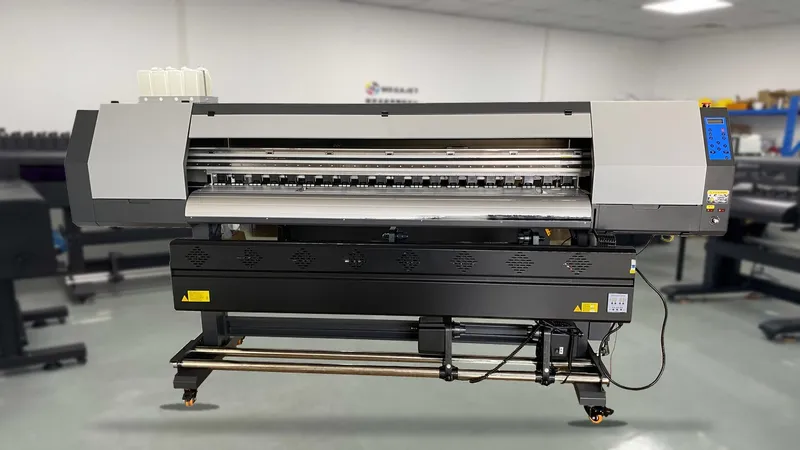
- E1 Series (Eco-Solvent): For outdoor advertising banners, vinyl stickers, and car wraps. In small UV flatbed printers like our 40 × 60 cm model, we often install i1600-E1 to print UV ink. It runs UV ink very stably, and the replacement cost is much cheaper than original U1 heads. This is a very popular and cost-effective choice for small gift and signage printing shops.
- U1 Series (UV Curable): For large industrial UV flatbed and roll-to-roll printers running high-volume UV printing.
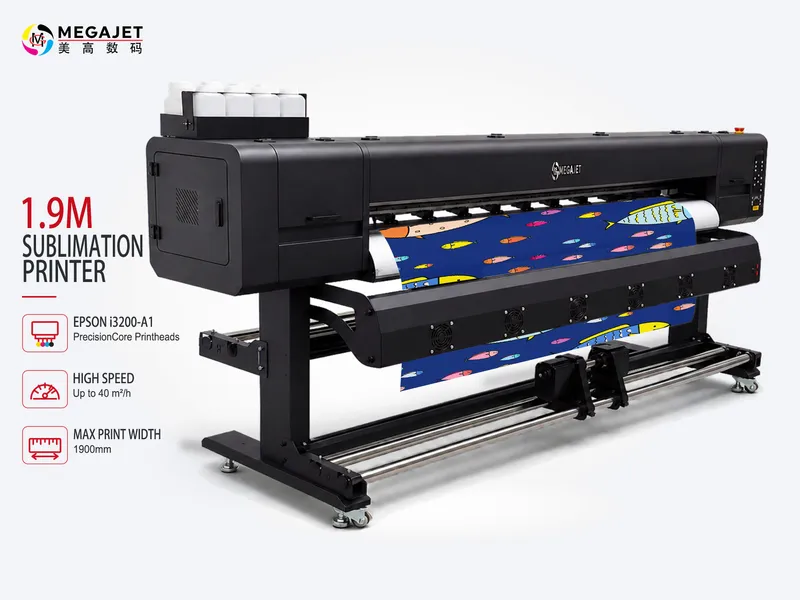
Megajet factory produces printers covering all these setups: 60 cm DTF printers (2-head, 3-head, and 4-head models), 160 cm eco-solvent printers with i3200-E1, 40 × 60 cm small UV flatbeds with i1600-E1, and 180 cm sublimation printers with i3200-A1.
How to choose based on your print volume?
We suggest customers choose based on your daily square meters, not just looking at specs:
- For startup shops or home studios (under 20-30 sqm per day): A 2-head i1600 DTF printer (about 8 sqm/h) is the most practical choice. It gives you stable PrecisionCore quality with low investment risk.
- For growing print shops with steady daily orders: We recommend our 60 cm dual-head i3200 DTF printer (about 10 sqm/h) or a 4-head i1600 model (about 16 sqm/h). The 2-head i3200 is very standard, reliable, and easy to maintain.
- For printing factories, wholesale orders, and gang sheet services: Our 60 cm 4-head i3200 DTF printer (about 20 sqm/h) is the best choice. When you print hundreds of meters every day, printing speed directly decides your profit.
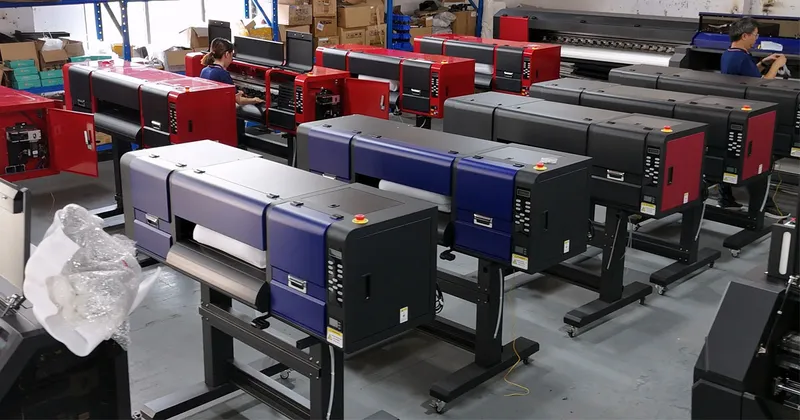
Because Megajet manufactures both i1600 and i3200 machines, we will recommend the right model based on your real order volume.
The white ink problem: what you must know before buying
In DTF printing, white ink is always the most sensitive part. White ink has titanium dioxide powder inside, so if the printer stays idle for a long time, the white pigment will slowly sink and settle in the ink tubes, dampers, and printhead nozzles.
Our factory engineer advice for all DTF users: Never leave the DTF machine unused for too long. If you do not print for more than 3 days, you must do a cleaning and moisturizing maintenance for the printheads before starting next time. A machine that prints every day actually has much fewer clogging problems than a machine that only prints once a week.
To protect the heads, Megajet machines use:
- Sealed capping stations that lock the head tightly when parked to prevent drying.
- High-quality ink dampers and negative pressure ink supply to stop air bubbles.
- Optional fluorescent white and spot color setups for special fashion orders.
- Detailed video guides and 1-on-1 technical training from our engineers before machine export.
Spare parts, delivery time, and factory terms
- Original Epson printheads in stock: We keep original Epson i3200-A1 printheads and i1600 heads in factory stock. MOQ is 1 piece. We dispatch goods immediately after payment confirmation (款到发货), and delivery time depends on international express like DHL/FedEx.
- Printhead warranty policy: All printheads sold from our factory are 100% brand new original Epson parts. In the digital printing industry, printheads are consumable parts. Because printhead life depends on customer ink quality, daily cleaning, and operator skills, printheads carry no warranty once ink is injected.
- Factory direct spare parts: We supply all matching parts directly: dampers, head cables, capping stations, mainboards, and ink pumps.
- OEM/ODM & dealer support: We support customized frame color, customer brand logo printing, English/Spanish/Russian software UI, and technical support for regional distributors.
Summary: how to make your final decision
To summarize the decision for your print shop:
- Choose i1600 if you are starting a new business, testing a local market, or printing under 30 square meters a day. You get true PrecisionCore output clarity while keeping machine investment and future head replacement costs low.
- Choose i3200 if you already have steady daily orders, operate multi-head production lines, or run gang sheet wholesale printing. The 25% faster throughput easily covers the head price difference in daily production.
If you are evaluating suppliers or want to learn more about our Zhongshan manufacturing facility, please contact the Megajet engineering team. Tell us your target daily volume and ink type, and we will send a tailored machine configuration with exact throughput calculations.